November 16, 2026 infrastructure
Foundation models for real-time actor embeddings

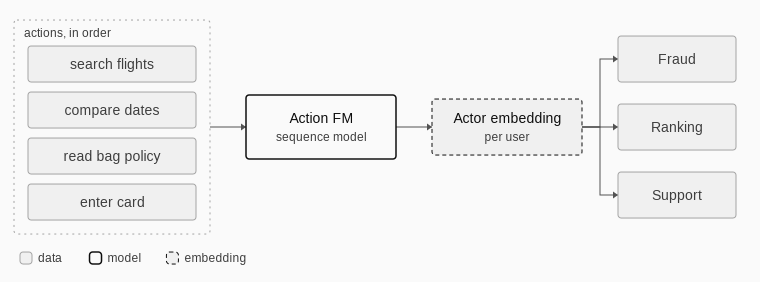
Action foundation models summarize ordered user actions into one shared vector that captures live intent across downstream tasks.
Action foundation models summarize ordered user actions into one shared vector that captures live intent across downstream tasks.
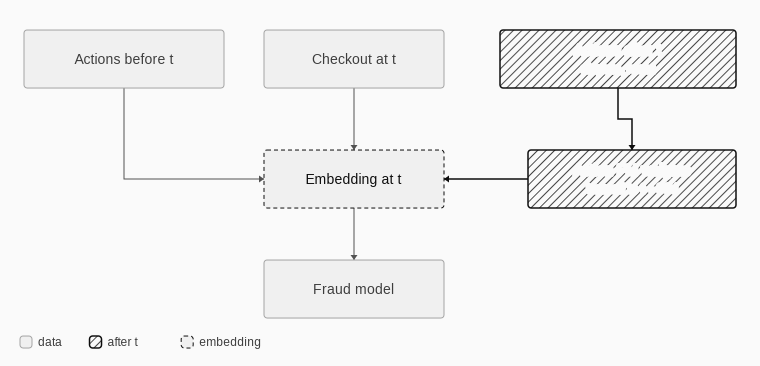
Upstream sequence models trained on future logs leak outcomes into past embeddings and inflate offline backtests.
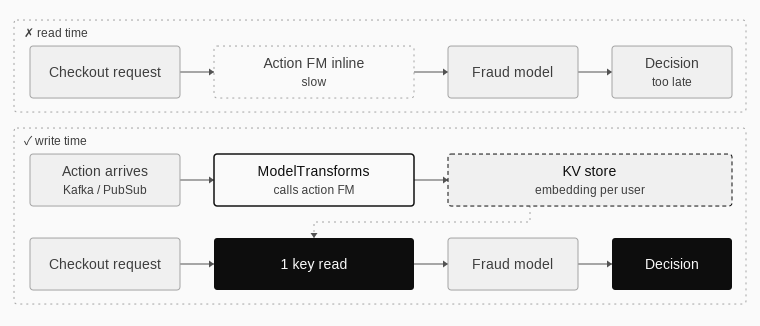
Write-time streaming updates actor embeddings within seconds for millisecond reads, and atomic snapshot promotion prevents mismatched vectors across retrains.
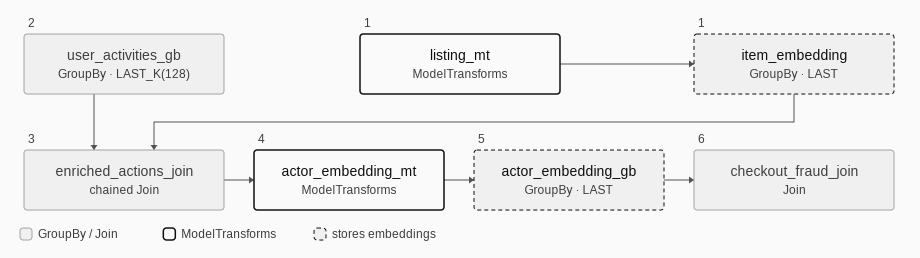
Six declarative Python configs define a three-model action FM chain that Zipline.AI compiles into backfills, live streams, online lookups, and isolated rollouts.
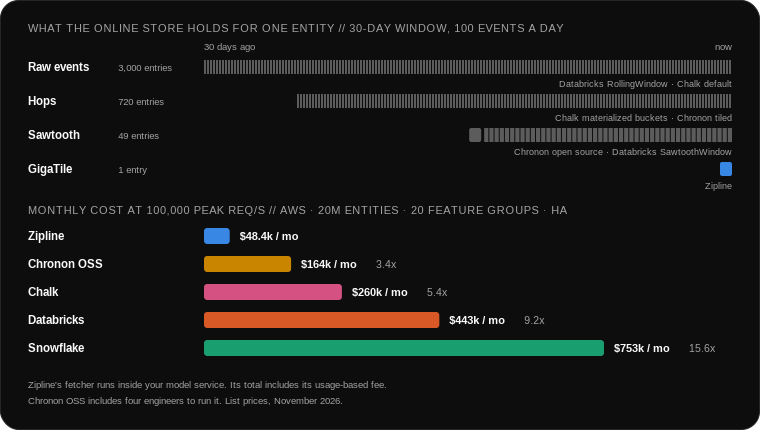
How Zipline compares with Chalk, Databricks, Snowflake and Feast on iteration speed, scale, serving cost and training-serving consistency.
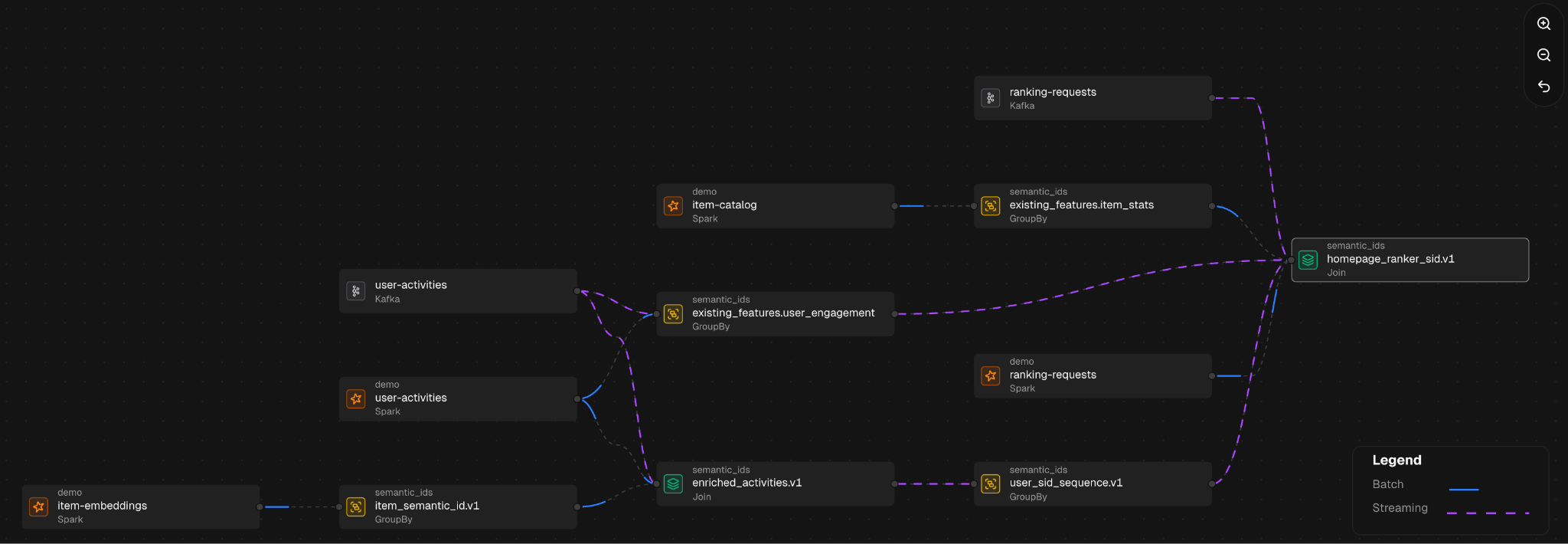
This post covers how teams building personalization, search or recommender systems can use Zipline.AI to incorporate Semantic ID based generative recommendations into their stack.
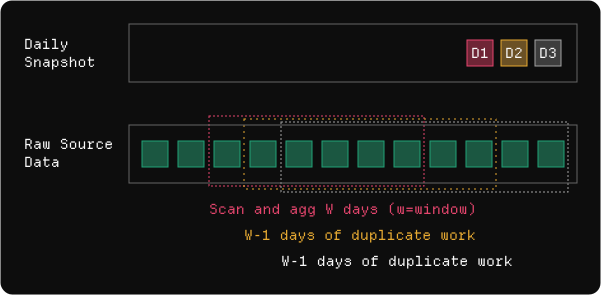
A technical deep dive into how Zipline.AI optimizes computation for cheap and fast batch jobs.
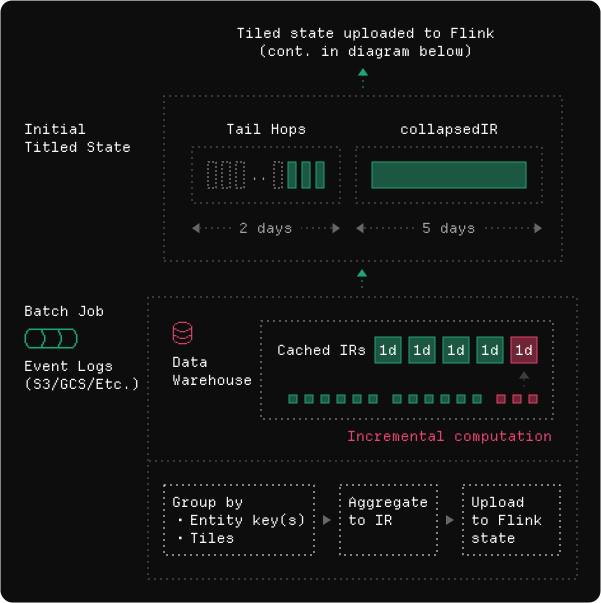
Streaming feature computation remains a challenge for many teams. This article goes over various architectures, their tradeoffs, and the approach that Zipline.AI has found to work at scale.
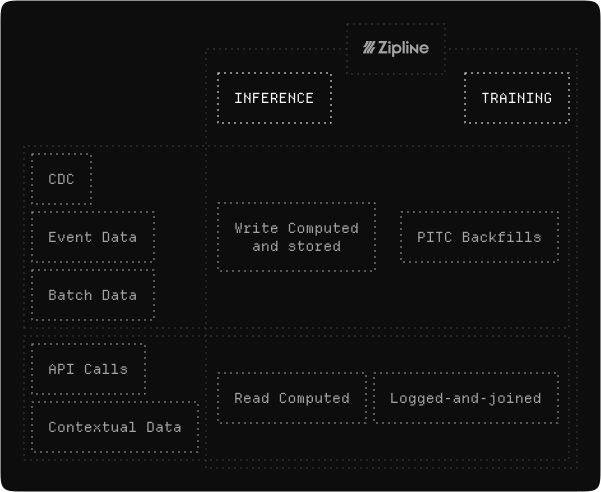
AI platforms need to support a combination of read and write computed features/embeddings to effectively enable modern workloads.
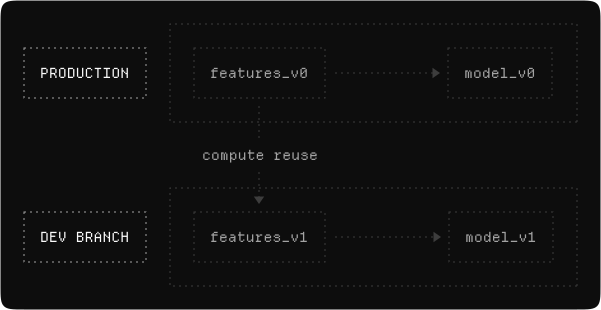
This post covers the challenges of iterating on existing AI systems in a safe and efficient manner, and the approach that Zipline.AI’s platform takes to solve these challenges.

